
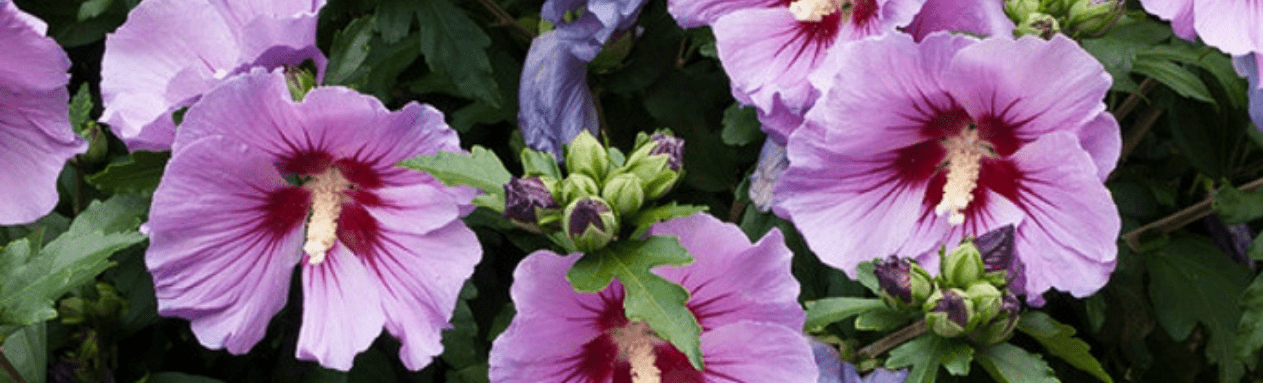
The Magnificent Rose of Sharon
I went to a spring neighborhood yard sale about 15 years ago. I purchased a small plant about 8 inches high. I brought it home and plated next to our garage door. My husband asked what it was and I told him a plant that grows wild in Virginia and was pretty, at least that was what the woman who I purchased it from told me. She said it was called the Rose of Sharon.
So it grew, and the next 3 years it grew and the 3rd year low and behold it had grown to 4 feet tall. Then as if by magic it as full of the most beautiful white flowers. I had done nothing but plant the little plant.
Don’t let the name fool you. The flowering shrub we call rose of Sharon isn’t a rose at all. Native to parts of Asia, this plant with exotic-looking blooms, Hibiscus syriacus, is a member of the mallow family and a relative of tropical hibiscus. You may also know it as shrub althea, althea tree, Chinese hibiscus or hardy hibiscus.
No matter what you call it, rose of Sharon is lovely. The large single, semi-double or double flowers can be flat or frilly and open from summer to fall when few other shrubs are blooming. There are many varieties of rose of Sharon, so you can find violet, blue, pink, red, lavender, purple or white flowers. These woody plants drop their leaves in the fall.
How to Plant Rose of Sharon
Hardy to USDA Zones 5 to 8 (and sometimes 9), rose of Sharon is easy-to-grow and happy in full sun in northern gardens with at least six hours of sun each day. In southern areas, the plants like morning sun and some protection from the intense afternoon heat.
The Rose-of-Sharon is a deciduous, upright, occasionally spreading shrub or small tree with multiple trunks. The branches grow upright and will not droop except when in flower. The leaves emerge late in the spring. Leaves are medium to dark green in summer with no or poor yellow fall color. The bark is light brown and thin, and the wood itself is weak. The trumpet shaped flowers are 2-4″ across in colors of white, pink, red, violet or purple. They stay open for one day and close at night. Single-flowered varieties are hardier than the double-flowered types. The roots are located just below the soil surface. This shrub is tolerant of many soil textures, moisture conditions, and acid to alkaline pH if it is in full or nearly full sun. However, it requires ample moisture and some protection from midday to afternoon sun to flower at it’s best. The shrub will keep its upright form as it grows, so little pruning is required. While shaping or pruning can be done at any time, pruning in late winter or early spring will minimize the loss of the emerging flower buds on the new growth. Pruning heavily in early spring or pruning back to 2-3 buds will produce fewer but larger flowers. It can be pruned to create a single trunk small specimen tree. Transplanting should be done in the spring as the shrub takes some time to get established. Plant about 2′-3′ apart for a single row hedge.
Rose of Sharon prefers moist, well-drained soil with an alkaline to neutral pH. Once Hibiscus syriacus is established, it can tolerate drought and pollution, making it a great choice for urban gardens. Since the plants can grow 8 to 12 feet tall and spread 6 to 10 feet, think about where you’ll put rose of Sharon before you plant.
Plant rose of Sharon in spring or fall. The plants tend to leaf out a bit late in springtime, so don’t be alarmed if yours gets off to a slow start. Space the plants 6 to 10 feet apart; read the tag or label for the exact spacing. You can also grow rose of Sharon in a large container filled with good quality potting soil. A dwarf rose of Sharon (also Hibiscus syriacus) that tops out at 3 to 4 feet tall and wide is a good choice for this. Otherwise, you can let your plant grow into a bushy shrub or train it as a tree.
If you’re planting rose of Sharon in the garden, dig a hole twice as wide as the plant’s root ball. Don’t plant too deeply. The top of the root ball should sit a little higher above the soil than it was growing in its nursery pot.
Mix a general-purpose, controlled-release fertilizer into the soil you removed and backfill the hole halfway. Add water and fill in the rest of the hole. Water again to eliminate air pockets and settle the soil. You may want to give your plant some liquid fertilizer in mid-summer.
In the past, rose of Sharon shrubs were known to drop seeds that sprouted everywhere, which was a nuisance in some lawns and gardens. Modern breeders have gotten around that problem by developing seedless varieties or plants with few viable seeds.
How to Grow Rose of Sharon
After planting your rose of Sharon, add a layer of mulch to help keep moisture in the soil and prevent weeds from sprouting. Hibiscus syriacus likes fertilizer with plenty of phosphorus, which is the “K” in the ratio shown on the fertilizer’s label. Look for a timed-release fertilizer so you won’t have to feed again for a few months.
Avoid overfeeding rose of Sharon, which can cause the leaves to turn brown or yellow and drop. Over-fertilizing can also encourage the leaves to grow at the expense of flowers.
Rose of Sharon makes a lovely addition to a wildlife garden, where it will attract butterflies and hummingbirds.
Now all this good advice about the Rose of Sharon you can do or you can do like I did. When we moved 5 years ago, my husband took about 15 clippings off the now 12 ft shrub and rooted them in sand over the winter in a bed outside. Well they all survived and I have a hard full of this wonderful and beautiful plant. We give them away at times as gifts and all you receives them loves this plant.