
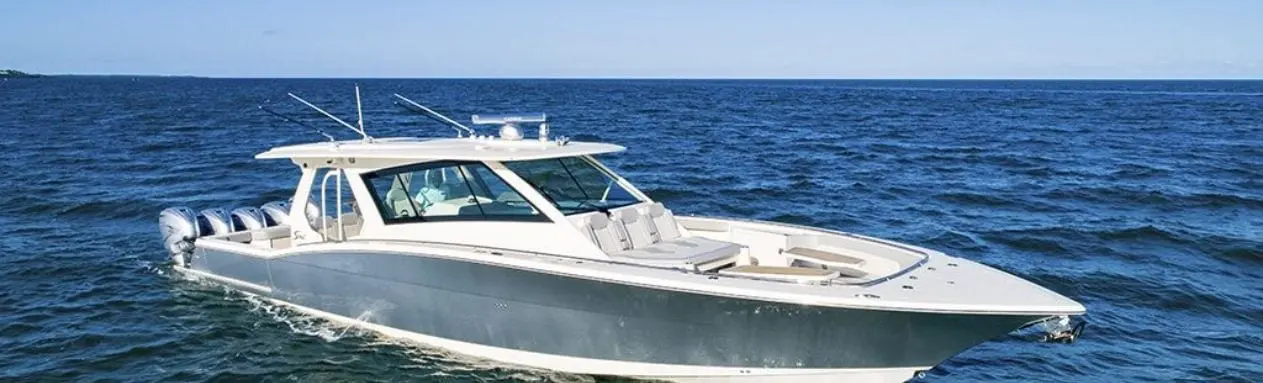
Power boats- out board motors:
If you’re shopping for a new outboard-powered boat, the engine may not be the same model year as the boat. Most engine manufacturers have stopped designating model years for outboard engines and have replaced the model-year designator on the engine’s serial number with a code that signifies an “era” in which all engines are supposed to be the same, with similar upgrades and technology.
The hull identification number (HIN) on the transom doesn’t lie. Check the HIN on any boat you consider buying (new or used) to make sure that the age of the boat is correct. The last two digits indicate the boat’s model year.
The marine survey on the boat you are looking at isn’t a diamond and doesn’t last forever. Even a survey that’s a couple months old may not be up to date enough, and never rely on a seller’s old survey he got when he bought the boat. Hire a surveyor familiar with the type of boat you’re interested in and affiliated with either the National Association of Marine Surveyors (NAMS) or the Society of Accredited Marine Surveyors (SAMS). It’s not wise to hire a surveyor recommended by the seller or broker.
The “lightly used” theory debunked: If a preowned boat has been sitting for two or three years, it almost always will need more work than you think. Boats and engines last longer when they’re regularly used, and problems compound when they’re idle for long stretches.
What you should know about a boat dealer or broker:
Some extended warranties (often misleadingly referred to service contracts) are profit centers for dealers – so know which ones are best for you. Factory-backed plans (e.g., from Mercury or Yamaha) typically offer more coverage and oversight. Other contract plans administered by independent companies allow retailers to markup contracts more than 100% over the actual cost they pay to the service-contract company − but their cost is negotiable.
Some warranties can be transferred, but know there may be a cost or some hoops to jump through. If you buy a boat with a transferable warranty, call the company to find out how to transfer the warranty and call back a few weeks later to confirm the transfer is complete.
Manufacturers can’t force you to use their dealers for routine service on your new boat. They also can’t force you to use their brands of lubricants or parts. But if you use an independent shop or do your own work, keep careful notes about what you did and keep all receipts. And don’t scrimp on the quality of the lube or parts. For warranty repair work, you do have to visit an authorized dealer.
Boat brokers are not regulated like real estate agents. Only Florida and California brokers have to be licensed, and only California requires an exam. Elsewhere, anyone can call themselves a broker. One way of finding a good broker is to look for a Certified Professional Yacht Broker (CPYB) who is a member of the Yacht Brokers Association of America (YBAA), has taken a comprehensive exam and pledged to abide by a code of ethics.
What you should know about a boat seller:
When buying a boat from a private party, sellers don’t always have to disclose problems. Other than a known defect or condition that might render the boat or engine unsafe, there is no obligation for the seller to volunteer information the buyer does not ask for. Ask the seller if there has been any major damage repaired from collisions or sinking. Use a purchase agreement or U.S. Coast Guard bill of sale documents, and note what the seller says before you and the seller sign it.
It’s almost always more expensive to have repairs done after the sale, long after the seller is out of the picture. So when buying a boat, rather than have a seller discount the boat’s price upfront because of needed repairs, have them fix it using a reputable repair service.
Please check out my blog about Questions you may have about boat ownership in Virginia.